Key Highlights
- Brian Armstrong proposed Shenzhen-style special economic zones to accelerate crypto and tech innovation in the U.S.
- Coinbase itself has been active in such areas, having already invested in Prospera, a pioneering charter city project in Honduras.
- Armstrong has so far proposed 10 dedicated U.S. zones in 2025, one specifically for crypto.
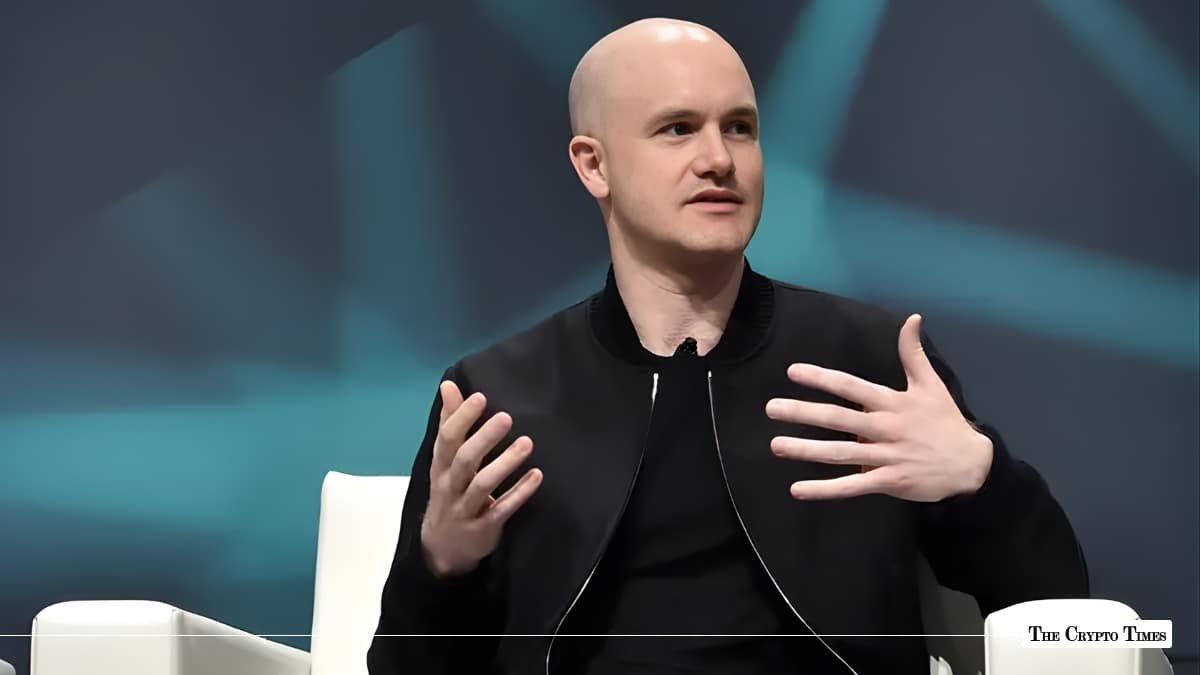
Coinbase CEO Brian Armstrong urged the United States to create Shenzhen-style special economic zones.
In a recent interview with the Relentless Podcast, Armstrong said, “I hope we get to make like a crypto city or some special economic zones in the US. I think we want these sandboxes for innovation for a lot of things.” He argued that regulatory-light zones, designed as innovation sandboxes, could support the growth of crypto and other emerging technologies.
Armstrong added that zones modeled on hubs such as Shenzhen, Hong Kong, Singapore, and Dubai could help the U.S. stay competitive in sectors like crypto, biotech, and drones. He also described a vision of “free cities” with minimal regulatory barriers.
Why the SEZ model
Shenzhen transformed from a fishing village into a major technology center after being designated a Special Economic Zone in 1980. Armstrong suggested that similar zones in the U.S. could allow companies to test new technologies, including decentralized finance and drone systems, under more flexible regulatory conditions.
Coinbase itself has been active in such areas, having already invested in Prospera, a pioneering charter city project in Honduras that is also designed to be crypto-native with a heavy use of digital assets for payments, governance, and economic activity. With this, it signals the company’s real-world commitment to such models.
Armstrong’s long-standing vision
Armstrong has advocated for special economic zones for several years. In 2025, he proposed the creation of 10 such zones in the U.S., including one specifically for crypto.
His proposal comes at a crucial time when the U.S. is already leading in Bitcoin institutionalization and has been backed politically under the current pro-crypto government. At the same time, the fragmented regulation continuously hinders on-chain regulations, primarily in areas such as Asia and the Middle East.
Here, SEZs could act as backup options for Western institutions, permitting faster iteration on technologies such as stablecoin infrastructure and decentralized applications.
Broader context
If the proposed zones are adopted, then it would help in repatriating crypto talent and capital, boost on-chain economic activity, and position the U.S. as a true “crypto capital.”
Armstrong sees these free cities as broader experiments in governance that align with Coinbase’s mission of creating greater economic freedom through blockchain technology.
Also Read: The CLARITY Act: Trump Wants a Win, but Banks and Coinbase Won’t Play Ball
Disclaimer: The information researched and reported by The Crypto Times is for informational purposes only and is not a substitute for professional financial advice. Investing in crypto assets involves significant risk due to market volatility. Always Do Your Own Research (DYOR) and consult with a qualified Financial Advisor before making any investment decisions.