Key Highlights
- Vitalik Buterin warned that the EU’s Digital Services Act creates a no-space environment that stifles permissionless innovation.
- He argued that administrative hurdles disproportionately harm small entrepreneurs and decentralized projects.
- Buterin called for a regulatory balance that protects digital freedoms while maintaining the core values of the European project.
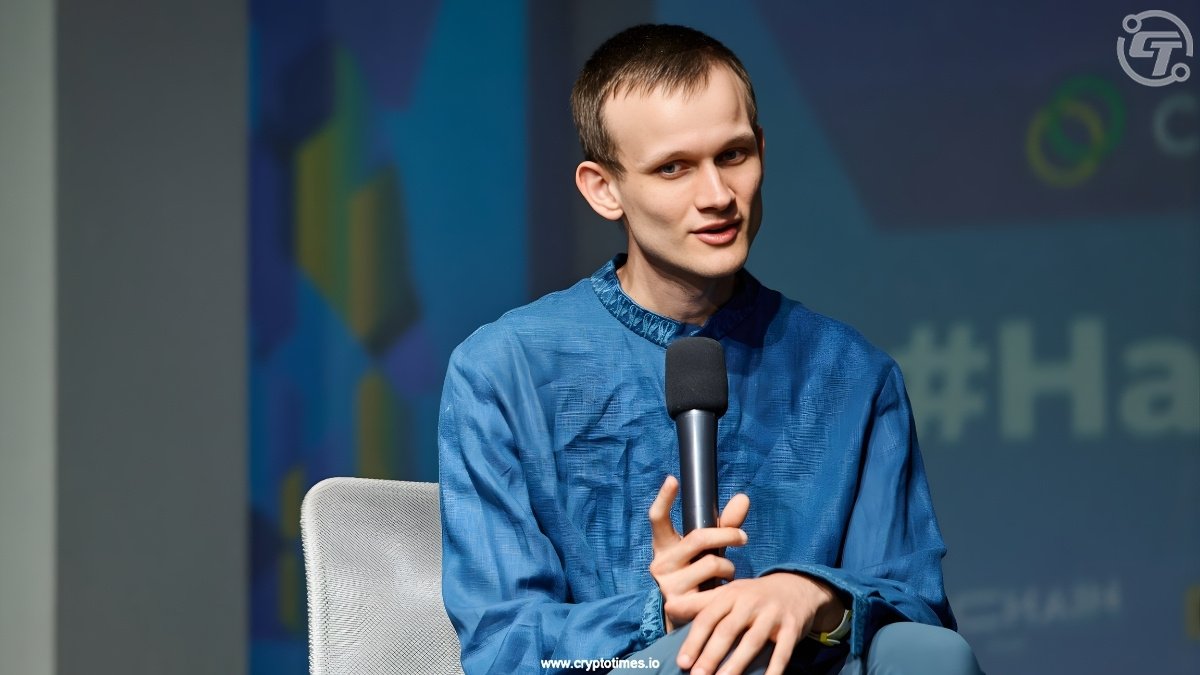
Ethereum co-founder Vitalik Buterin has expressed his opposition to the kind of regulation being pursued by the European Union regarding the Digital Services Act. In an X post on December 26, he described what he terms “an ideology taking pride in a neat, sanitized online environment” as a call for a more pirate party-oriented means of empowering users.
This opposes a more controlled approach where the EU has a say in what constitutes a pluralistic view versus a controlled view of the online world. It is a criticism based on the philosophical foundations of modern content moderation.
He said the approach seems like there is a desire to leave no space for ideas or expressions that people may dislike or find contentious. And it seems like there is a philosophical underpinning here, which is basically totalitarian. Buterin added that if society thinks there is a benefit to eliminating all pathogens, it seems like they have no choice but to overlook good-faith disagreements and construct a system of control by experts.
Redefining a free society
Buterin argued that in “a free society, you have to bite the bullet that some people, somewhere, will be selling things that you consider dangerous and saying things you consider disinformation and vicious lies.”
The Digital Services Act (DSA) is seen as one of the European Union’s flagship laws that regulates online platforms. The EU considers the Digital Services Act as a means of ensuring that there is protection of fundamental rights and that there is a safe internet.
However, such measures are seen from a different perspective by individuals such as Buterin, who foresees that Europe is slowly progressing toward an ideology that celebrates a clean and hygienic internet space that is free from corporate or fascist infections.
Buterin analogized the ideal online world with biotic environments and not impenetrable fortresses. This is because the biggest problem with online communities such as X isn’t the presence of fringe communities, but rather that the algorithm promotes and shoves their content into the faces of the wider public.
He referenced the Taiwanese model introduced by Audrey Tang as a possible way for online communities to offer incentives for more healthy online conversation without necessarily banning everything.
Technical solutions and future policies
Buterin also recommended some technical and policy changes to avoid what he terms the “dark path of having something that claims to support fundamental rights but actually is not trusted by anyone.” These included encouraging the EU to begin enabling rather than hindering its users through interoperability and competition.
By analogizing to his own position on the EU’s USB-C charging port initiative, which he supported because of its market-enhancing competition rationale, he encouraged social media to “support incentivizing social platforms to be more open, and to be more transparent.”
He proposed one particular idea about requiring platforms to share their algorithm with a one to two-year lag. He also spoke about zero-knowledge proofs (zk-proofs) to ensure that there is no discrepancy between the algorithm used presently and one that is later shared publicly. In essence, he opposed banning anonymity on social media.
In its place, he suggested privacy-preserving macro-scale analytics to determine which groups promote particular ideas. The intervention of one of the most celebrated players in the decentralized tech world draws attention to the growing tensions running between the libertarian ethos of the Silicon Valley model and the ambitions of the European regulators.
Buterin’s take on the issue was to spot a chance to reiterate the value of the freedom of speech by standing up for the ideal of pluralism against the manipulation of the powerful. His warning was that if the EU keeps on the same course, it risks building a world that pretends to be in support of all the basics of human freedom but gets perceived as the ‘basic human right’ to follow in the footsteps of a few tech elites. It should be a place where the harmful stuff doesn’t dominate, but isn’t a place where it’s all eliminated.
Also Read: Vitalik Buterin Sells UNI, KNC, and DINU for $16.8K USDC